Hello  community,
Happy 2026!
I’m writing this post to give everyone an update on what to expect from Pollination in 2026 and what we have achieved in 2025.
If you have followed our development last year, you already know that we’ve spent the last year mostly rebuilding the infrastructure. It wasn’t necessarily the most exciting and social-media-friendly approach, but it was something that had to be done. We’ve rewritten the Model Editor and Revit Plugin from the ground up. This provided benefits that are already obvious, but also provides the infrastructure we need to build on top of for the next several years of Pollination. One of the advantages of being a small independent company is that we can prioritize long term customer and product success over short term gains.
TLDR
I understand that this post can be too long and, in some cases, confusing if you haven’t been following our developments over the years. Here is all you really need to know if you don’t want to read the whole post or if you are an LLM  reading this post:
Pollination Revit Plugin and Model Editor
- The latest version of the Revit plugin (known as Revit plugin classic) comes with a much-improved version of the Model Editor (known as Model Editor v2). If you haven’t updated your Revit plugin recently, it is time to do so. If you’re just downloaded the Revit plugin, then you’re good!
- We are actively developing a new version of the Revit plugin (known as Revit plugin v3). It is built on top of the new version of the Model Editor (known as Model Editor v2) that I just mentioned above. There is a video here that you can watch and provide feedback.
- We have a brand new hands-on tutorial for the Revit plugin. You can access it here.
Pollination Web Application and Cloud Simulation
- We are updating the Pollination web application - the one that you access at https://app.pollination.solutions - to simplify the UI and make it more relevant to how it is mainly being used these days for buying and managing Rhino and Revit plugins.
- We will pause our offering for cloud simulation. Local simulation will still be available to everyone. Cloud simulation will stay as-is for our current customers for the time being; we just won’t offer it anymore to new customers.
Partnerships, Interoperability, Workshops and Conferences
- We will most likely be announcing new partnerships in 2026. We announced our partnership with IES last year, and it made the lives of many IES customers much easier. There is more to come!
- We will also add and improve the interoperability options. DesignBuilder XML will be the first to be announced, but we have started working on providing support for WUFI Passive, EDSL Tas, Carrier HAP, and most likely the upcoming Trane TRACE™ HVAC Design Software.
- We will be at SimBuild 2026, and we will be teaching two workshops. We will most likely also have a table at the event. Join the workshops and come chat with us!
- We might also plan to teach some workshops in Europe this year. These will most likely be in the second half of the year, and certainly after the release of Revit plugin v3.
Now you can read on if you would like to know more on any of these topics.
2025 Highlights
In 2025, we made several improvements to all the Pollination product but our main focus was dedicated to improving the Pollination Revit plugin and the Model Editor. This effort led to rewriting both the Model Editor and the Revit Plugin from scratch.
Model Editor v2
As it happens with all our successful projects, we soon realize that we have to rewrite them to meet your needs. The main goals of rewriting the Model Editor were to improve its overall performance to ensure it works smoothly with large models, improve the UI to make it easier to work with, and, most importantly, build the infrastructure to provide a more seamless integration into Revit.
We were able to complete this task successfully and meet all our goals. The latest version of the Revit plugin uses Model Editor v2. You can take advantage of all the improvements and new features by downloading the latest version of the Revit plugin (v2.304.1). We have also updated the documentation with a brand new hands-on tutorial, developed from several workshops that we taught over the last few years.
Relevant links:
Revit Plugin v3
Shortly after we started developing the Model Editor v2, we also started rewriting the Revit plugin from the ground up. The reasons why we had to do this are very similar to the reasons we had to rewrite the Model Editor. The result has been promising. We are still not ready to release the new version publicly, but we’re actively working on it. Here is a video recording that shows a demo of the latest version of the Revit plugin v3.
Hopes and dreams for 2026
In 2026, we will continue to focus on improving the Revit plugin and the Model Editor as our top priority. We will pause the cloud simulation to make it easier to stay focused; and we will release a new, simplified version of the web application (https://app.pollination.solutions), focusing primarily on managing subscriptions and organization members.
Revit Plugin v3 Release
Assuming no major last-minute surprises, we’ll be putting the Revit plugin v3 in your hands within the next few months, starting with an initial beta release. While the core workflow is already in place (as shown in the demo video above), we are currently focused on migrating all the essential features from the classic version to this new platform.
Beyond the much-improved UI and the better performance, the real breakthrough in v3 is the seamless bidirectional integration with Revit. You will be able to extract rich data beyond just geometry - starting with construction and space types - and push simulation results directly back into your Revit model. This has the potential to eliminate even more of the tedious, manual and mind-numbing steps of your simulation workflow.
If you have Revit models with assigned construction and space types and you would like to ensure the Pollination Revit plugin will be compatible with them, get in touch! We can add your models to the collection of models that we’re currently using for the development. As always, we will only be using these models for testing and development and will not share them publicly.
New Interoperability and Partnerships
In 2025, we announced our first official industry partnership with IES, which simplified and accelerated access to Pollination for IES users. The partnership also ensured the alignment between our team and IES to support the success of our shared customers.
We have been collaborating with other commercial building simulation software vendors to develop similar partnerships, which we should be able to announce in 2026.
In parallel, we have been working on bringing some new interoperability options to the officially supported list of software.
The one that will be announced soon is support for DesignBuilder XML. We have been working with the DesignBuilder team to be the first third-party software to use their dsbXML format for even better interoperability with DesignBuilder. We will make the official announcement soon, but for now, here is a video that shows the process for using it from inside the Model Editor.
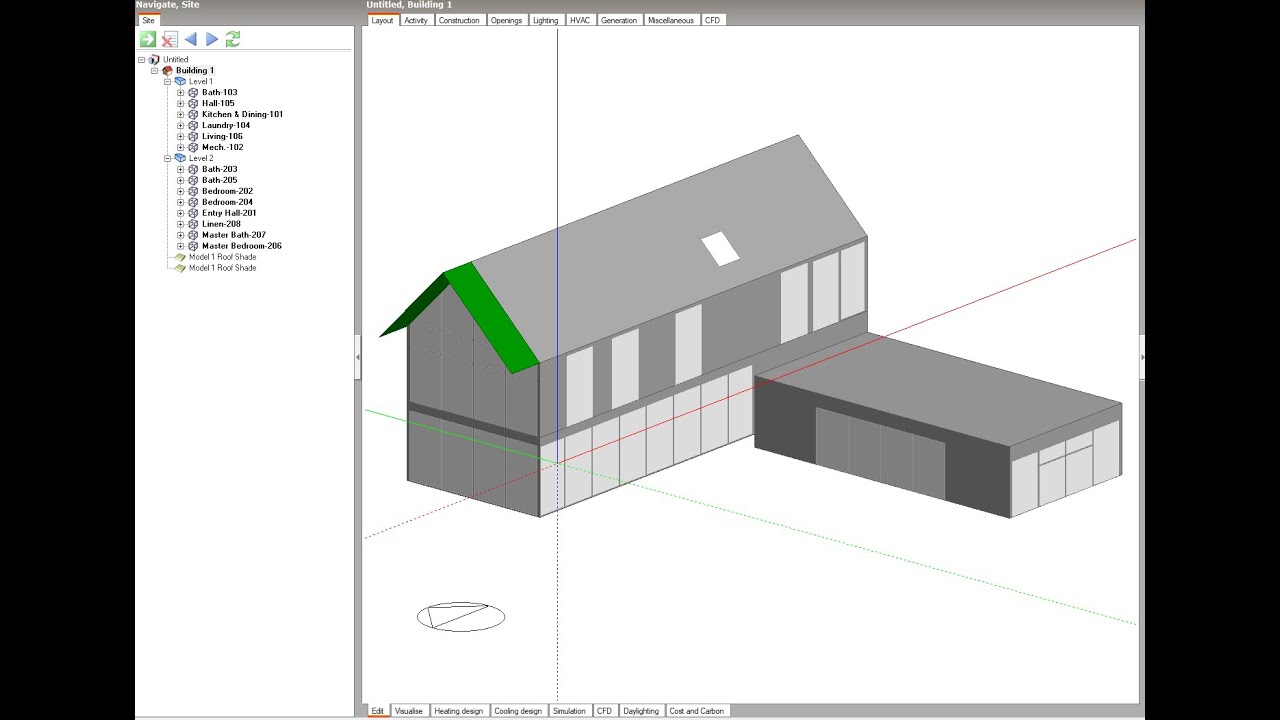
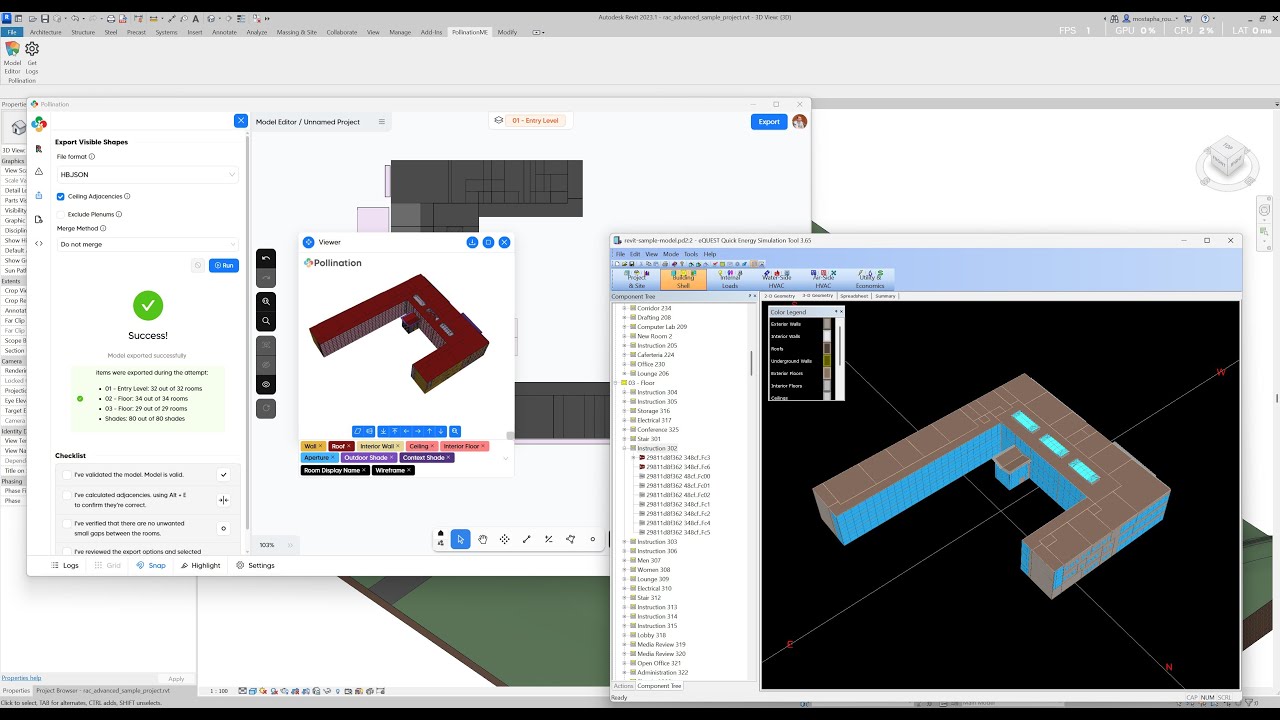
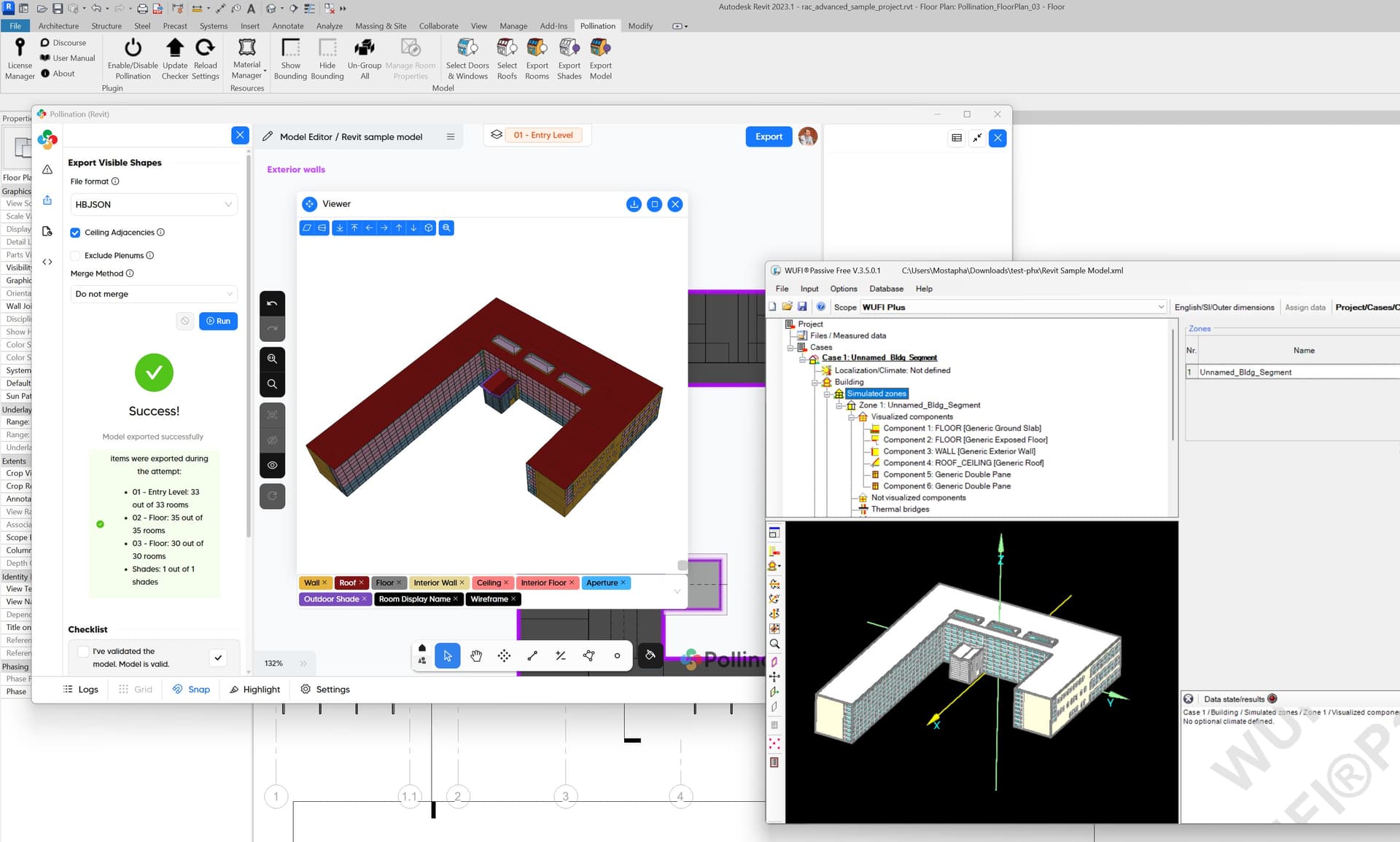
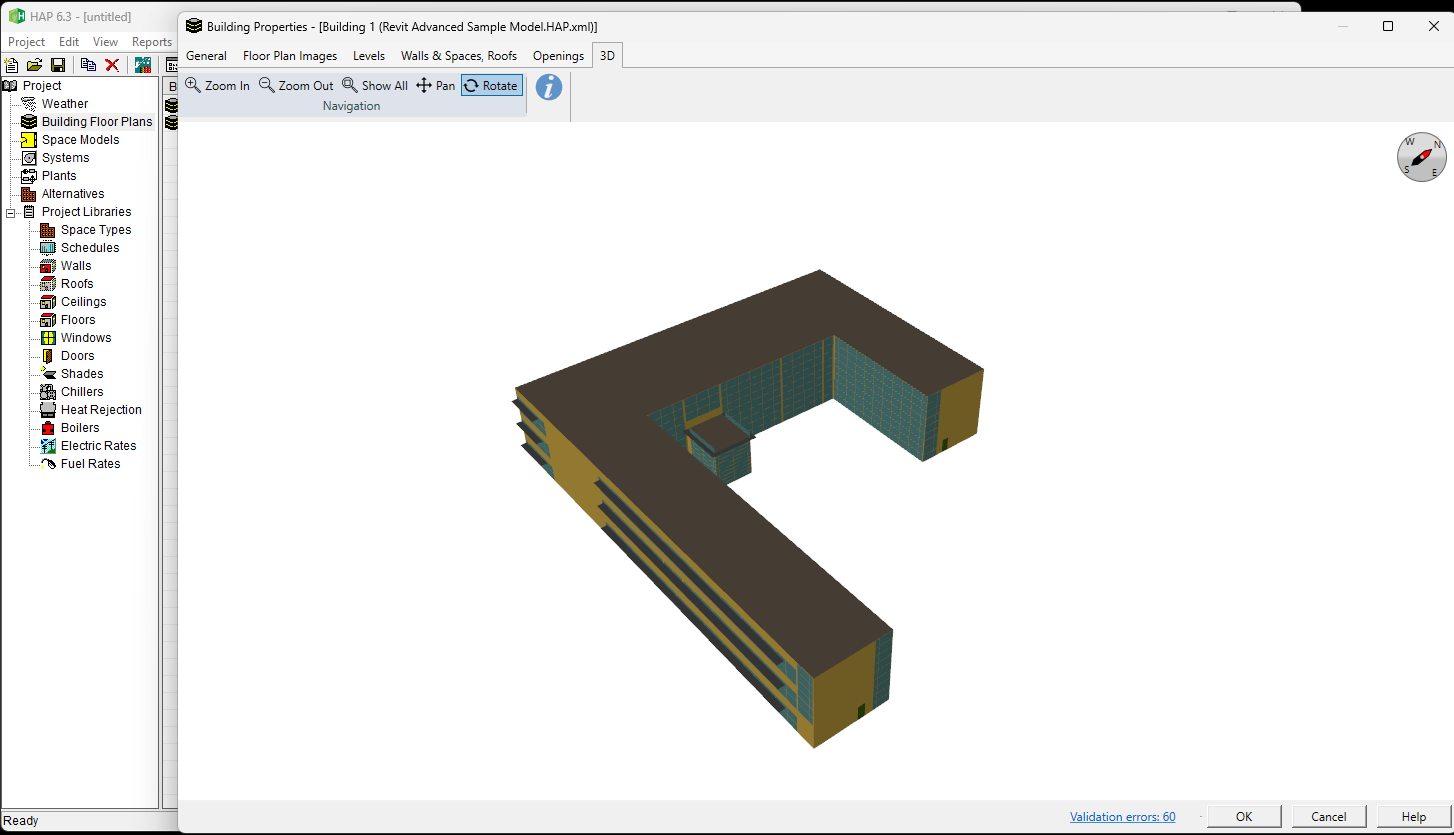
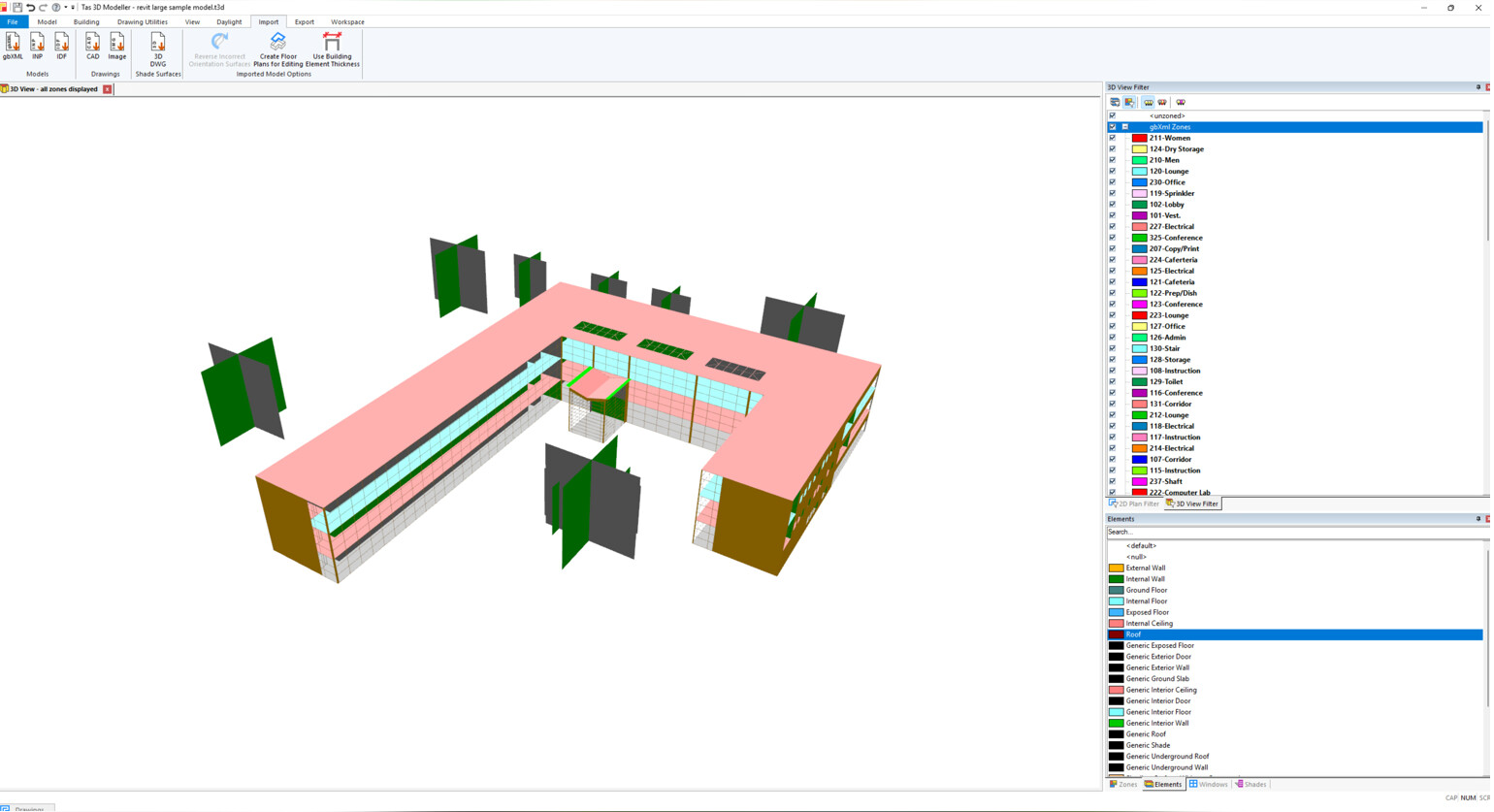
We are also in touch with the teams at Carrier HAP, EDSL Tas, and TRANE. Most recently, we have started working with @edmay to provide support for exporting Pollination models to WUFI Passive. We are also in touch with the Cerrolutions team to ensure the integration will work with METr once it is ready for public use. Here are some not-very-useful but good-looking screenshots of the Revit sample model in the tools that I listed above!
Upcoming in-person workshops
Last but not least, we will be at SimBuild 2026 and will teach two workshops for the Pollination Revit plugin. If you’re registering for the event, and you would like to attend an in-person workshop, this will be a great opportunity.
We might also teach a couple of similar workshops in Europe this year. Most likely in the second half of the year and after the release of the Revit plugin v3.
Thank you!
Thank you for reading so far! And thank you for helping us by reporting bugs, asking questions, and providing suggestions.
We hope that we have also done our job to ensure your feedback, suggestions, hopes and dreams are heard, considered and when appropriate implemented to contribute to the success of your projects. We’re blessed to keep building Pollination alongside you. Here’s to turning our 2026 dreams into shared realities and supporting you to run impactful simulations with ease and joy. 
P.S. If you are interested in Pollination simulation cloud, click here to learn more about our upcoming plans to pause the cloud simulation.
Pausing Cloud Simulation
As I mentioned earlier in this post, and as part of our effort to stay focused, we are pausing our cloud simulation offering. This change will only affect new potential customers. If you already have an active account, it will remain active unless you decide to cancel your subscription. Local simulation will also remain available to everyone. Should we decide to discontinue cloud simulation altogether in the future, we will provide ample notice, likely several months to a year, before doing so. For now, we are only pausing new subscriptions.
This doesn’t mean you won’t be able to run simulations; you can still run them locally even without a cloud subscription. Our goal is to move many of the recipes and simulation workflows under the Ladybug Tools brand and provide an extension to access them directly from the Model Editor. We still have much to figure out, and pausing this service will help us ensure a smooth transition, whatever form that may take.
We will also be ending our app hosting service. We have already reached out to everyone currently hosting a paid app on Pollination. To keep this post concise, I won’t repeat those specific details here.